

As a supplier of Airfoil Plug Fans, I often encounter questions from customers regarding the technical aspects of our products. One of the most common inquiries is about airfoil blade loading in an airfoil plug fan. In this blog post, I will delve into the concept of airfoil blade loading, its significance, and how it impacts the performance of our airfoil plug fans.
Understanding Airfoil Blade Loading
Airfoil blade loading refers to the distribution of aerodynamic forces acting on the blades of an airfoil plug fan. These forces are primarily generated by the interaction between the air flowing through the fan and the shape of the airfoil blades. The loading on the blades can be divided into two main components: lift and drag.
Lift is the force that acts perpendicular to the direction of the airflow and is responsible for generating the pressure difference that drives the air through the fan. Drag, on the other hand, is the force that acts parallel to the direction of the airflow and opposes the motion of the blades. The balance between lift and drag is crucial for the efficient operation of the fan.
The blade loading is typically expressed in terms of a coefficient, which is a dimensionless quantity that represents the ratio of the aerodynamic force to a reference value. The most commonly used coefficient for blade loading is the lift coefficient (Cl), which is defined as the ratio of the lift force to the dynamic pressure of the airflow and the area of the blade.
Significance of Airfoil Blade Loading
The airfoil blade loading has a significant impact on the performance and efficiency of an airfoil plug fan. A well-designed blade loading distribution can result in higher efficiency, lower noise levels, and improved overall performance. Here are some key aspects of the significance of airfoil blade loading:
- Efficiency: The lift coefficient and the blade loading distribution play a crucial role in determining the efficiency of the fan. By optimizing the blade shape and the loading distribution, we can maximize the lift force while minimizing the drag force, resulting in higher efficiency and lower energy consumption.
- Noise Reduction: The blade loading also affects the noise levels generated by the fan. A smooth and uniform blade loading distribution can reduce the turbulence and the associated noise, making the fan quieter during operation.
- Performance: The blade loading distribution can influence the pressure rise and the flow rate of the fan. By carefully designing the blade shape and the loading, we can achieve the desired performance characteristics, such as high pressure rise or high flow rate, depending on the application requirements.
Factors Affecting Airfoil Blade Loading
Several factors can affect the airfoil blade loading in an airfoil plug fan. These factors include the blade shape, the angle of attack, the airflow velocity, and the operating conditions. Here is a brief overview of these factors:
Blade Shape: The shape of the airfoil blade has a significant impact on the blade loading. Different blade shapes, such as symmetrical or cambered airfoils, can result in different lift and drag characteristics. The design of the blade shape is crucial for achieving the desired blade loading distribution.
Angle of Attack: The angle of attack is the angle between the chord line of the blade and the direction of the airflow. The angle of attack affects the lift and drag forces acting on the blade. By adjusting the angle of attack, we can control the blade loading and optimize the performance of the fan.
Airflow Velocity: The airflow velocity also affects the blade loading. Higher airflow velocities can result in higher lift and drag forces, which can increase the blade loading. The design of the fan should take into account the expected airflow velocities to ensure optimal blade loading.
Operating Conditions: The operating conditions, such as the temperature, pressure, and humidity of the air, can also affect the blade loading. These factors can change the density and the viscosity of the air, which can in turn affect the aerodynamic forces acting on the blades.
Our Airfoil Plug Fan Products
At our company, we offer a wide range of airfoil plug fans that are designed to provide high performance and efficiency. Our fans are available in different sizes and configurations to meet the diverse needs of our customers. Here are some of our popular airfoil plug fan products:
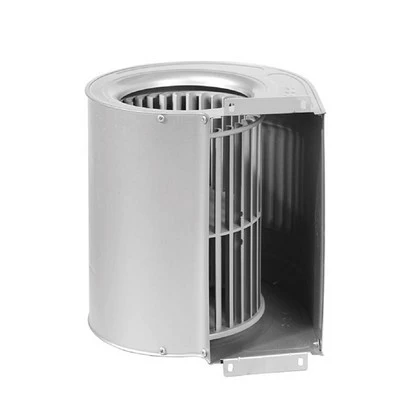
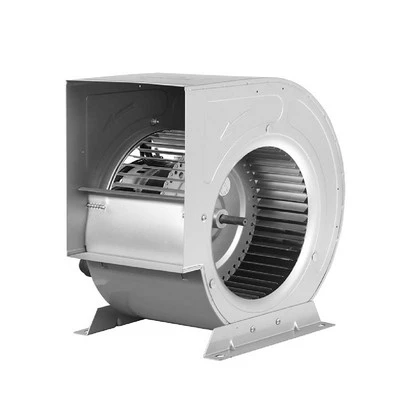
- Direct Drive Airfoil Plug Fan / Centrifugal Fan, SYWB Series: This series of fans features a direct drive design, which eliminates the need for belts and pulleys, resulting in higher efficiency and lower maintenance requirements. The airfoil blades are designed to provide optimal blade loading and performance.
- Direct Driven Centrifugal Fan (Forward Curved Blades, Dual Inlet), SYP Series: The SYP series fans are equipped with forward curved blades and dual inlets, which provide high flow rates and low pressure rises. The blade loading is carefully optimized to ensure efficient operation.
- Direct Driven Centrifugal Blower (Forward Curved Blades, Double Inlet), SYZ Series: This series of blowers is designed for applications that require high pressure rises. The forward curved blades and the double inlet design provide excellent performance and efficiency.
- EXTERNAL ROTOR MOTOR DIRECT DRIVEN CENTRIFUGAL FANS: These fans feature an external rotor motor, which provides a compact and efficient design. The airfoil blades are designed to provide optimal blade loading and performance.
- Airfoil Plug Fan / Direct Driven Centrifugal Fan, SYWA Series: The SYWA series fans are designed for applications that require high efficiency and low noise levels. The airfoil blades are carefully designed to provide optimal blade loading and performance.
Contact Us for Purchase and Negotiation
If you are interested in our airfoil plug fan products or have any questions about airfoil blade loading, please feel free to contact us. Our team of experts is ready to assist you in selecting the right fan for your application and providing you with detailed technical information. We look forward to the opportunity to work with you and meet your air handling needs.