Hey there! As a supplier of Airfoil Plug Fans, I often get asked about all sorts of technical stuff related to these fans. One topic that comes up quite a bit is airfoil vortex shedding in an airfoil plug fan. So, let's dive right in and break it down.
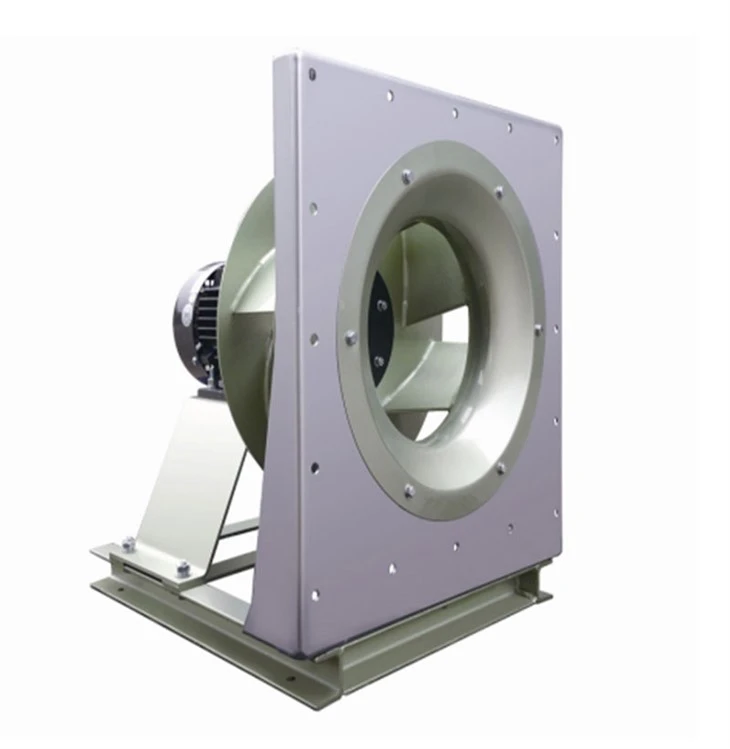
First off, let's talk about what an airfoil plug fan is. It's a type of direct-driven centrifugal fan, which means it uses a motor to directly drive the fan blades. These fans are known for their high efficiency and quiet operation. They're often used in ventilation systems, air conditioning units, and various industrial applications. If you're interested in our product lineup, you can check out our Airfoil Plug Fan / Direct Driven Centrifugal Fan, SYWA Series.
Now, on to the main topic: airfoil vortex shedding. When air flows around an airfoil (the shape of the fan blade), it can create a series of swirling vortices. These vortices are like little whirlpools of air that form on the trailing edge of the airfoil. Vortex shedding occurs when these vortices break away from the airfoil and are carried downstream by the airflow.
This phenomenon isn't just some random scientific quirk. It can have a big impact on the performance and functionality of an airfoil plug fan. For starters, vortex shedding can cause vibrations in the fan blades. These vibrations can lead to increased noise levels, which is a major no-no in many applications where quiet operation is crucial.
Moreover, excessive vibrations due to vortex shedding can also reduce the lifespan of the fan. The constant stress on the blades can cause fatigue, leading to cracks and other forms of damage over time. This means more frequent maintenance and replacement costs for you, which is definitely not something you want.
But it's not all bad news. Understanding airfoil vortex shedding can actually help us design better airfoil plug fans. By carefully shaping the airfoil and adjusting its angle of attack (the angle at which the air hits the blade), we can minimize the formation of vortices and reduce the effects of vortex shedding.
For example, some of our engineers have been working on optimizing the airfoil design of our Direct Drive Airfoil Plug Fan / Centrifugal Fan, SYWB Series. By using advanced computational fluid dynamics (CFD) simulations, we can predict how the air will flow around the airfoil and make adjustments to reduce vortex shedding. This results in a fan that runs more quietly, lasts longer, and is more energy-efficient.
Another factor that affects airfoil vortex shedding is the Reynolds number. The Reynolds number is a dimensionless quantity that describes the ratio of inertial forces to viscous forces in a fluid flow. In the context of an airfoil plug fan, a higher Reynolds number generally means more turbulent flow, which can increase the likelihood of vortex shedding.
To deal with different operating conditions and Reynolds numbers, we offer a range of fan models. Our EXTERNAL ROTOR MOTOR DIRECT DRIVEN CENTRIFUGAL FANS are designed to be versatile and can operate efficiently under various flow rates and pressures.
In addition to the airfoil design and operating conditions, the speed of the fan also plays a role in airfoil vortex shedding. Higher fan speeds can increase the frequency of vortex shedding, which can lead to more severe vibrations. That's why it's important to choose the right fan speed for your specific application.
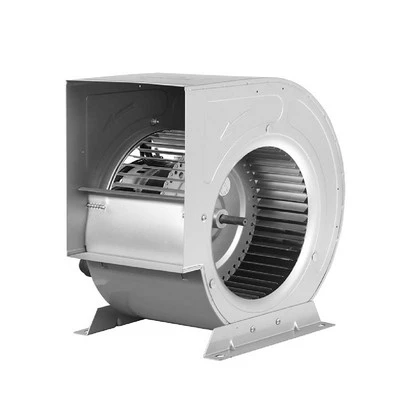
If you're looking for a direct-driven centrifugal fan with forward-curved blades, we have options for you too. Our Direct Driven Centrifugal Fan (Forward Curved Blades, Dual Inlet), SYP Series and Direct Driven Centrifugal Blower (Forward Curved Blades, Double Inlet), SYZ Series are designed to provide high airflow and pressure while minimizing the effects of vortex shedding.
So, there you have it – a basic overview of airfoil vortex shedding in an airfoil plug fan. As a supplier, we're committed to providing you with high-quality fans that are designed to perform at their best. Whether you're in the market for a new ventilation system or need to replace an old fan, we've got you covered.
If you're interested in learning more about our products or have any questions about airfoil vortex shedding or other technical aspects, don't hesitate to reach out. We're here to help you make the right choice for your needs. Let's start a conversation and see how we can work together to meet your ventilation requirements.