

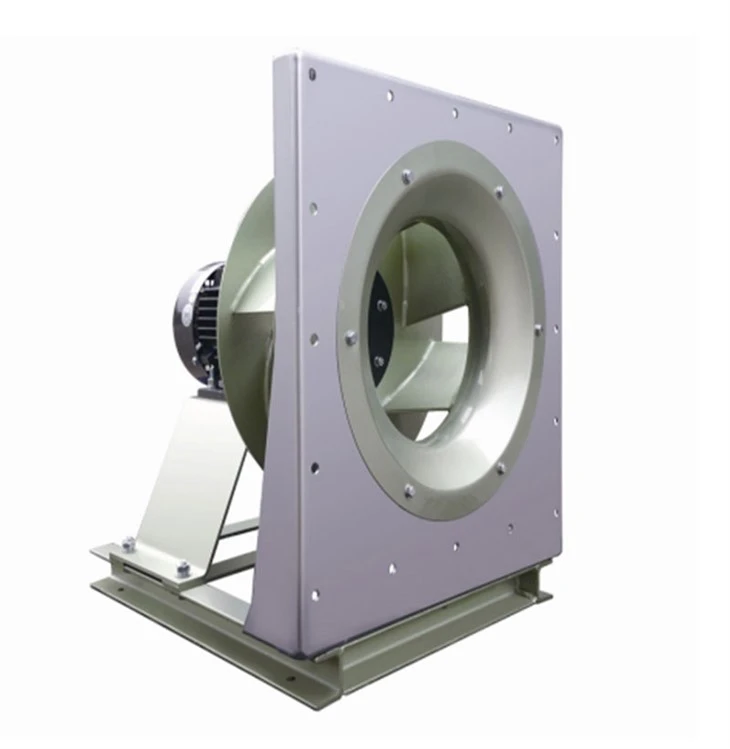
Air volume and pressure are two critical performance indicators of a Direct Drive Airfoil Plug Fan. As a professional supplier of these fans, accurately understanding and measuring these parameters is essential for ensuring the fans meet the application requirements. In this blog, I will delve into the detailed methods and techniques for measuring the air volume and pressure of a Direct Drive Airfoil Plug Fan.
Understanding the Basics
Before we proceed to the measurement methods, it's important to have a clear understanding of what air volume and pressure mean in the context of a Direct Drive Airfoil Plug Fan.
Air Volume: Also known as airflow rate, air volume refers to the amount of air that the fan can move in a given period, typically measured in cubic feet per minute (CFM) or cubic meters per hour (m³/h). It indicates the fan's capacity to transport air.
Air Pressure: There are two main types of air pressure relevant to fans: static pressure and total pressure. Static pressure is the pressure exerted by the air on the walls of the duct or the system, which is necessary to overcome the resistance in the system. Total pressure is the sum of static pressure and velocity pressure, which represents the total energy of the air flow. Air pressure is usually measured in inches of water column (in. WC) or pascals (Pa).
Measuring Air Volume
Anemometer Method
One of the most common ways to measure air volume is by using an anemometer. An anemometer is a device that measures the speed of air. Here are the steps to measure air volume using an anemometer:
Select the Measurement Location: Choose a location in the duct where the air flow is stable and uniform. Avoid areas near bends, elbows, or elbows, as the air flow may be turbulent in these areas.
Measure the Air Velocity: Place the anemometer in the duct at the selected location and measure the air velocity at multiple points across the cross - section of the duct. For a rectangular duct, divide the cross - section into smaller equal areas (e.g., a grid), and measure the velocity at the center of each area. For a circular duct, measure the velocity at multiple radial positions.
Calculate the Average Air Velocity: Calculate the average of all the measured air velocities. This average velocity represents the mean velocity of the air flow in the duct.
Determine the Cross - Sectional Area of the Duct: Measure the dimensions of the duct (width and height for a rectangular duct, or diameter for a circular duct) and calculate the cross - sectional area (A) using the appropriate formula (e.g., for a rectangular duct, (A = W\times H); for a circular duct, (A=\pi\times\left(\frac{D}{2}\right)^2), where (W) is the width, (H) is the height, and (D) is the diameter).
Calculate the Air Volume: Multiply the average air velocity ((V)) by the cross - sectional area of the duct ((A)) to obtain the air volume ((Q)). The formula is (Q = V\times A).
Flow Hood Method
A flow hood is another useful tool for measuring air volume, especially for measuring the air flow at the outlet of a fan or an air grille. Here's how to use a flow hood:
Position the Flow Hood: Place the flow hood over the outlet of the fan or the air grille, ensuring a good seal to prevent air leakage.
Take the Reading: The flow hood is equipped with sensors that measure the air flow rate directly. Read the air volume value displayed on the flow hood's screen.
Measuring Air Pressure
Manometer for Static Pressure
A manometer is a device used to measure pressure. To measure the static pressure of a Direct Drive Airfoil Plug Fan, you can follow these steps:
Insert the Pressure Tap: Drill a small hole in the duct at the measurement location and insert a pressure tap. Make sure the pressure tap is perpendicular to the air flow direction to accurately measure the static pressure.
Connect the Manometer: Connect the pressure tap to the manometer using a flexible tube. The manometer will display the static pressure value.
Pitot Tube for Total Pressure and Velocity Pressure
A pitot tube is a more advanced tool that can measure both total pressure and velocity pressure. The steps to use a pitot tube are as follows:
Position the Pitot Tube: Insert the pitot tube into the duct at a right angle to the air flow, with the open end facing the air flow direction to measure the total pressure and the side holes to measure the static pressure.
Connect to the Manometer: Connect the total pressure port and the static pressure port of the pitot tube to two different ports of a differential manometer. The differential manometer will display the pressure difference between the total pressure and the static pressure, which is the velocity pressure.
Calculate Pressure Values: Once you have the velocity pressure and static pressure values, you can calculate the total pressure ((P_t)) using the formula (P_t=P_s + P_v), where (P_s) is the static pressure and (P_v) is the velocity pressure.
Importance of Accurate Measurement
Accurately measuring the air volume and pressure of a Direct Drive Airfoil Plug Fan is crucial for several reasons:
- System Design: Proper measurement helps in the correct sizing and selection of the fan for a specific application. If the air volume and pressure are not accurately measured, the fan may not be able to provide the required air flow and pressure, leading to inefficient system operation.
- Performance Evaluation: Measuring these parameters allows us to evaluate the performance of the fan. We can compare the measured values with the fan's rated values to determine if the fan is operating within the specified range.
- Troubleshooting: In case of system problems such as low air flow or high noise levels, measuring the air volume and pressure can help identify the root cause of the problem.
Our Product Range
As a leading supplier of Direct Drive Airfoil Plug Fans, we offer a wide range of products to meet different customer needs. Our product portfolio includes:
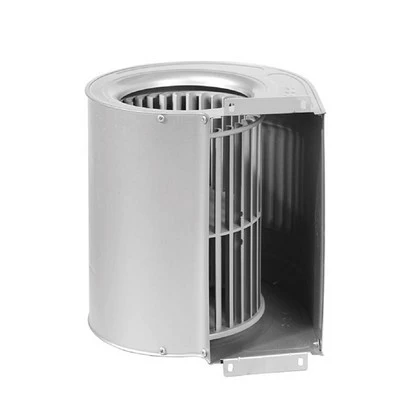
- EXTERNAL ROTOR MOTOR DIRECT DRIVEN CENTRIFUGAL FANS: These fans feature an external rotor motor for direct drive, providing high efficiency and reliable performance.
- Direct Driven Centrifugal Blower (Forward Curved Blades, Double Inlet), SYZ Series: The SYZ series blowers are designed with forward - curved blades and double inlets, offering high air volume and pressure.
- Direct Driven Centrifugal Fan (Forward Curved Blades, Dual Inlet), SYP Series: The SYP series fans are suitable for various applications where high - efficiency air movement is required.
- Airfoil Plug Fan / Direct Driven Centrifugal Fan, SYWA Series: The SYWA series combines the advantages of airfoil plug design and direct - driven technology for optimal performance.
- Direct Drive Airfoil Plug Fan / Centrifugal Fan, SYWB Series: The SYWB series fans are known for their energy - efficient operation and quiet performance.
Contact Us for Procurement
If you are interested in our Direct Drive Airfoil Plug Fans or need further information about air volume and pressure measurement, please feel free to contact us for a detailed discussion. We are committed to providing high - quality products and professional technical support to meet your specific requirements.