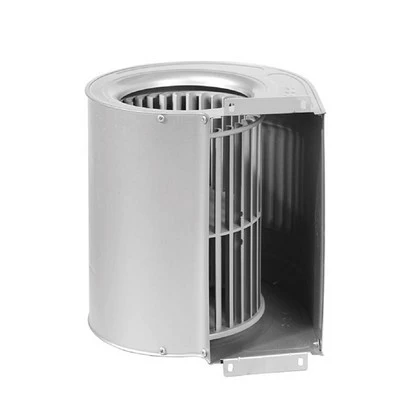
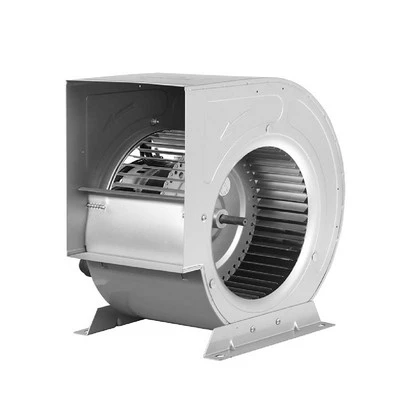
Hey there, fellow industry enthusiasts! As a proud supplier of top - notch Centrifugal Fans, I've got a ton of insights to share regarding optimizing the design of these essential pieces of equipment. Centrifugal fans play a crucial role in numerous applications, from industrial ventilation to HVAC systems. So, let's dive right into how we can make these fans work even better.
Understanding the Basics
Before we start optimizing, it's super important to understand how a centrifugal fan works. At its core, a centrifugal fan uses an impeller to increase the velocity of air or gas. The impeller rotates, and the blades push the air outwards from the center, creating a high - pressure area at the outlet. This basic principle is the foundation of all centrifugal fan designs.
Blade Design
One of the most critical aspects of centrifugal fan design is the blade shape. There are several types of blade designs, each with its own set of advantages.
- Forward - curved blades: These blades are curved in the direction of the impeller's rotation. They're great for applications that require high airflow at relatively low pressures. Our Direct Driven Centrifugal Fan (Forward Curved Blades, Dual Inlet), SYP Series is a prime example of a fan with forward - curved blades. The design allows for a compact size while still delivering a decent amount of airflow.
- Backward - curved blades: Opposite to forward - curved blades, backward - curved blades are curved against the direction of rotation. They are more efficient and can handle higher pressures. They're often used in industrial settings where energy efficiency is a top priority.
- Radial blades: Radial blades are straight and extend radially from the impeller hub. They're simple in design and can handle high - density gases and materials. However, they're not as efficient as the other two types.
When optimizing blade design, we need to consider the specific requirements of the application. For example, if the goal is to move a large volume of air in a residential HVAC system, forward - curved blades might be the way to go. But if it's an industrial process that demands high - pressure airflow, backward - curved blades would be more suitable.
Motor Selection and Drive System
The motor is the heart of the centrifugal fan. Choosing the right motor is essential for optimizing performance.
- Direct - drive motors: These motors are directly connected to the impeller, eliminating the need for belts or pulleys. This results in less energy loss and lower maintenance requirements. Our Airfoil Plug Fan / Direct Driven Centrifugal Fan, SYWA Series and Direct Drive Airfoil Plug Fan / Centrifugal Fan, SYWB Series both feature direct - drive motors, which offer high efficiency and reliability.
- Belt - drive motors: Belt - drive systems provide flexibility in terms of speed adjustment. They can be useful in applications where the fan speed needs to be changed frequently. However, they do require more maintenance, as the belts need to be checked and replaced regularly.
In addition to the motor type, the power rating of the motor is also crucial. An undersized motor won't be able to drive the impeller at the required speed, resulting in poor performance. On the other hand, an oversized motor will consume more energy than necessary, leading to higher operating costs.
Casing Design
The casing of a centrifugal fan plays a vital role in directing the airflow and increasing efficiency.
- Volute casing: This is the most common type of casing for centrifugal fans. It has a spiral shape that gradually increases in cross - sectional area from the inlet to the outlet. The volute casing helps to convert the kinetic energy of the air into static pressure, improving the overall efficiency of the fan.
- Scroll casing: Similar to the volute casing, the scroll casing also has a spiral shape. However, it's designed to provide a more uniform airflow distribution, which can be beneficial in some applications.
When optimizing the casing design, we need to ensure that the shape and dimensions are carefully matched to the impeller design. A well - designed casing can significantly improve the fan's performance and reduce noise levels.
Inlet Design
The inlet of the centrifugal fan is where the air enters the impeller. A proper inlet design can improve the efficiency of the fan by reducing turbulence and ensuring a smooth airflow.
- Bell - mouth inlet: This type of inlet has a smooth, rounded shape that helps to guide the air into the impeller with minimal turbulence. It's a common choice for high - efficiency centrifugal fans.
- Conical inlet: Conical inlets are used in some applications where space is limited. They can also help to increase the velocity of the air entering the impeller.
Noise Reduction
Noise is a major concern in many applications of centrifugal fans. Excessive noise can not only be a nuisance but also a safety hazard in some industrial settings.
- Aerodynamic design: By optimizing the blade shape, casing design, and inlet design, we can reduce the noise generated by the fan. For example, using backward - curved blades can result in less noise compared to forward - curved blades.
- Sound insulation: Adding sound - insulating materials to the casing can also help to reduce the noise level. This is especially useful in applications where the fan is located in a noise - sensitive area.
Performance Testing and Optimization
Once we've designed the centrifugal fan, it's important to test its performance. We can use various testing methods, such as airflow measurement, pressure measurement, and power consumption measurement. Based on the test results, we can make further adjustments to the design to optimize its performance.
For example, if the test shows that the fan is not delivering the required airflow, we might need to increase the impeller diameter or adjust the blade angle. If the power consumption is too high, we could consider using a more efficient motor or optimizing the casing design.
Our Product Range
As a Centrifugal Fans supplier, we offer a wide range of products to meet different customer needs. In addition to the products mentioned above, our Direct Driven Centrifugal Blower (Forward Curved Blades, Double Inlet), SYZ Series and EXTERNAL ROTOR MOTOR DIRECT DRIVEN CENTRIFUGAL FANS are also popular choices. These fans are designed with the latest technology and optimized for performance, efficiency, and reliability.
Let's Connect
If you're in the market for high - quality centrifugal fans or want to discuss how we can optimize the design for your specific application, don't hesitate to reach out. We're here to help you find the perfect solution for your needs. Whether it's a small - scale residential project or a large - scale industrial application, we've got the expertise and products to meet your requirements.