

Hey there, folks! As a supplier of Direct Driven Centrifugal Fans, I've been getting a lot of questions lately about how these fans perform in a positive - pressure environment. So, I thought I'd write this blog to share some insights on that.
First off, let's quickly understand what a Direct Driven Centrifugal Fan is. It's a type of fan that uses a direct - drive system, which means the motor is directly connected to the fan impeller. This setup reduces energy loss and maintenance needs compared to belt - driven systems. We offer a variety of these fans like the Airfoil Plug Fan / Direct Driven Centrifugal Fan, SYWA Series, the Direct Drive Airfoil Plug Fan / Centrifugal Fan, SYWB Series, the EXTERNAL ROTOR MOTOR DIRECT DRIVEN CENTRIFUGAL FANS, the Direct Driven Centrifugal Fan (Forward Curved Blades, Dual Inlet), SYP Series, and the Direct Driven Centrifugal Blower (Forward Curved Blades, Double Inlet), SYZ Series.
Now, let's dive into the performance changes in a positive - pressure environment.
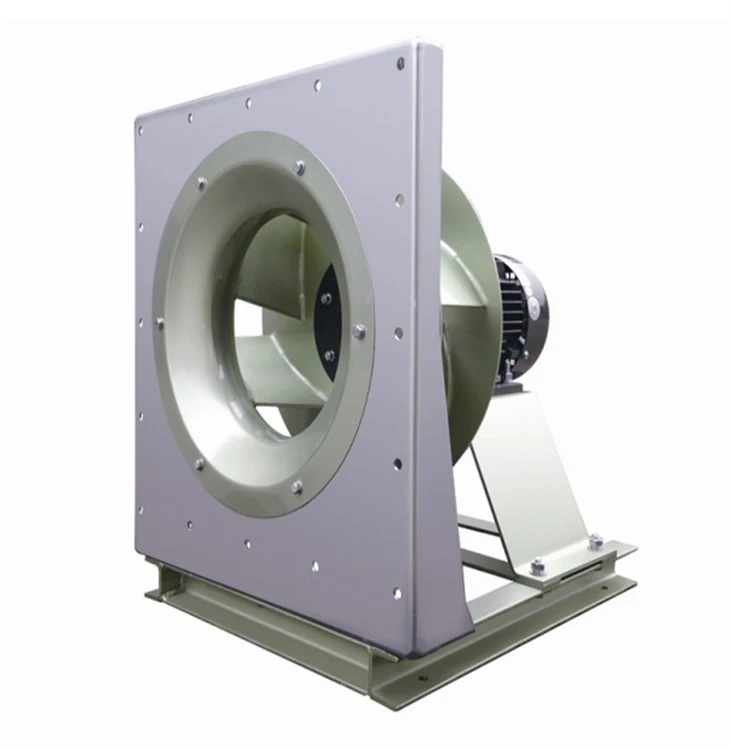
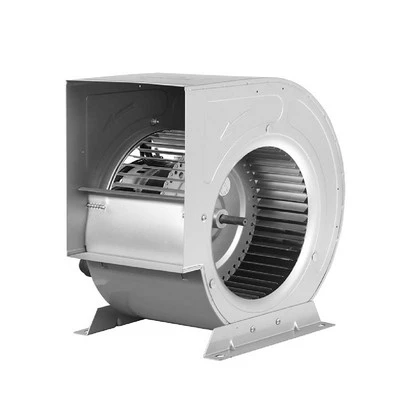
Airflow
In a positive - pressure environment, the airflow characteristics of a Direct Driven Centrifugal Fan can change quite a bit. Usually, in a normal environment, the fan creates a pressure difference to move air from an area of lower pressure to an area of higher pressure. But in a positive - pressure environment, the baseline pressure is already higher.
This means that the fan has to work harder to push additional air into the system. As a result, the airflow rate might decrease. The impeller has to overcome the existing positive pressure, and if the fan's motor doesn't have enough power, it won't be able to maintain the same airflow as it would in a normal - pressure environment.
For example, if you have a fan that's rated to move 1000 cubic feet per minute (CFM) in a standard environment, in a positive - pressure environment, that CFM might drop to 800 or even less depending on the magnitude of the positive pressure.
Pressure
The pressure capabilities of the fan also come into play. A Direct Driven Centrifugal Fan is designed to operate within a certain pressure range. In a positive - pressure environment, the fan has to generate a higher static pressure to move the air effectively.
The static pressure of the fan is the pressure it can create to overcome resistance in the ductwork or other components in the system. In a positive - pressure environment, the resistance is increased due to the pre - existing pressure. The fan might need to increase its static pressure output to maintain the desired airflow. If the fan is not designed to handle high - pressure differentials, it could lead to inefficiencies or even mechanical failures.
For instance, if a fan is designed to have a maximum static pressure of 2 inches of water column (in. WC) in a normal environment, in a positive - pressure environment, it might need to reach 3 in. WC or more. If the fan can't achieve this, the airflow will be restricted.
Efficiency
Efficiency is a crucial factor when it comes to fan performance. In a positive - pressure environment, the efficiency of a Direct Driven Centrifugal Fan can take a hit. As the fan has to work harder to overcome the positive pressure and maintain the airflow, it consumes more energy.
The motor of the fan has to generate more torque to drive the impeller against the higher pressure. This increased energy consumption might not result in a proportional increase in airflow. So, the overall energy - to - airflow ratio, which is a measure of efficiency, goes down.
Let's say a fan has an efficiency of 80% in a normal environment. In a positive - pressure environment, due to the increased energy requirements and decreased airflow, the efficiency could drop to 60% or lower. This not only means higher operating costs but also a less sustainable operation.
Noise
Noise is another aspect that can change. When a Direct Driven Centrifugal Fan is operating in a positive - pressure environment, it might produce more noise. This is because the fan is under more stress as it tries to push air against the positive pressure.
The increased load on the motor and the impeller can cause vibrations and turbulent airflows, which in turn create more noise. The impeller might experience uneven forces due to the higher pressure, leading to a louder and more irregular noise pattern.
If you're in an environment where noise levels need to be kept low, like an office or a hospital, the increased noise in a positive - pressure environment can be a real problem.
Maintenance
The maintenance requirements of the fan can also increase in a positive - pressure environment. The extra stress on the motor and the impeller means that the components are more likely to wear out faster.
The bearings in the motor might experience more friction due to the increased load, which can lead to premature failure. The impeller blades could also get damaged more easily as they work against the higher pressure. Regular inspections and maintenance will be even more important in this situation. You might need to check the motor's lubrication more frequently, inspect the impeller for any signs of damage, and ensure that all the connections are tight.
How to Mitigate These Changes
Now that we've discussed the performance changes, let's talk about how to handle them. One option is to choose a fan that's specifically designed for high - pressure applications. Our EXTERNAL ROTOR MOTOR DIRECT DRIVEN CENTRIFUGAL FANS are built to handle more challenging pressure conditions. They have more powerful motors and robust impellers that can withstand the extra stress.
Another approach is to optimize the system design. Make sure the ductwork is properly sized and has minimal resistance. A well - designed system can reduce the pressure that the fan has to overcome, improving its performance and efficiency.
You can also consider using variable - speed drives. These drives allow you to adjust the speed of the fan according to the pressure requirements. In a positive - pressure environment, you can increase the fan speed to maintain the desired airflow, and then reduce it when the pressure decreases. This can help save energy and reduce wear and tear on the fan.
Conclusion
In conclusion, a Direct Driven Centrifugal Fan experiences several performance changes in a positive - pressure environment. The airflow rate might decrease, the pressure requirements increase, the efficiency drops, the noise level goes up, and the maintenance needs become more frequent. But with the right fan selection, system design, and control strategies, you can mitigate these changes and ensure that the fan operates effectively.
If you're in the market for a Direct Driven Centrifugal Fan and need to use it in a positive - pressure environment, we're here to help. We have a wide range of fans to meet your specific needs. Contact us to start a discussion about your requirements, and let's find the perfect fan for your application.