

Hey there! As a supplier of multi - core sheathed cables, I've seen firsthand how the core configuration can have a huge impact on signal transmission. In this blog, I'm gonna break down the relationship between core configuration and signal transmission in multi - core sheathed cables.
Let's start with the basics. What exactly is a multi - core sheathed cable? Well, it's basically a cable that contains multiple conducting cores, all wrapped up in a protective sheath. These cables are used in a wide range of applications, from power distribution in buildings to data transmission in telecommunications.
The core configuration of a multi - core sheathed cable refers to the number of cores, their size, and how they're arranged within the cable. Each of these factors can affect signal transmission in different ways.
Number of Cores
The number of cores in a multi - core sheathed cable is a crucial factor. More cores can mean more data or power can be transmitted simultaneously. For instance, in a data - transmission scenario, a cable with more cores can carry multiple data streams at once. However, having too many cores can also lead to problems.
As the number of cores increases, the chances of electromagnetic interference (EMI) also go up. The cores are in close proximity to each other, and the electrical currents flowing through them can generate magnetic fields that interfere with each other. This interference can distort the signals and lead to data errors. For example, in a high - density data - center environment, if a multi - core cable has too many cores without proper shielding, the data packets being transmitted through different cores can collide and get corrupted.
On the other hand, if you don't have enough cores, you might not be able to meet the transmission requirements. For power applications, if you're trying to power multiple devices from a single cable with too few cores, you may experience voltage drops due to the high current demand. This can lead to devices not operating properly or even malfunctioning.
Core Size
The size of the cores also plays a significant role in signal transmission. Larger cores generally have lower resistance. In power cables, this means less energy is lost as heat when current flows through the cable. For example, in a high - power industrial application, using a cable with larger cores can reduce power losses and improve the overall efficiency of the system.
In signal - transmission cables, larger cores can handle higher - frequency signals better. They can carry more power without significant attenuation, which is the loss of signal strength over distance. However, larger cores also take up more space within the cable. This can limit the number of cores that can be included in a multi - core sheathed cable, or it can increase the overall size of the cable.
Smaller cores, on the other hand, are more suitable for low - power and low - frequency applications. They're also more flexible, which can be an advantage in situations where the cable needs to be bent or maneuvered. But they're more prone to signal attenuation, especially over longer distances.
Core Arrangement
How the cores are arranged within the cable is another important aspect. There are different types of core arrangements, such as a circular arrangement, a flat arrangement, or a twisted - pair arrangement.
A circular arrangement of cores is common in many multi - core sheathed cables. This arrangement allows for a relatively compact cable design. However, it can still be prone to EMI, especially if the cores are not properly shielded. The magnetic fields generated by the cores can interact with each other, causing signal interference.
A flat arrangement of cores is often used in applications where the cable needs to be laid flat, such as in some building wiring systems. This arrangement can reduce the overall thickness of the cable, but it can also increase the risk of crosstalk between adjacent cores. Crosstalk is the transfer of signals from one core to another due to electromagnetic coupling.
One of the most effective arrangements for reducing EMI and crosstalk is the twisted - pair arrangement. In a twisted - pair cable, the cores are twisted around each other in pairs. This twisting helps to cancel out the magnetic fields generated by the currents in the cores. Twisted - pair cables are widely used in telecommunications, such as Ethernet cables, because they can provide reliable signal transmission over relatively long distances.
Different Types of Multi - Core Sheathed Cables and Their Impact on Signal Transmission
Now, let's take a look at some specific types of multi - core sheathed cables and how their core configurations affect signal transmission.
Insulated and Sheathed Cable (BVV)
Insulated and Sheathed Cable ( BVV ) is commonly used in building wiring for power distribution. It usually has a relatively simple core configuration, with a small number of cores. The cores are typically made of copper or aluminum, and they're insulated with a plastic material.
The simple core configuration of BVV cables makes them suitable for low - frequency power transmission. However, they may not be the best choice for high - speed data transmission due to their lack of advanced shielding and twisted - pair arrangements. The cores in BVV cables are arranged in a way that's mainly focused on providing reliable power supply to electrical appliances and lighting fixtures.
Insulated and Sheathed Flexible Cable (RVV)
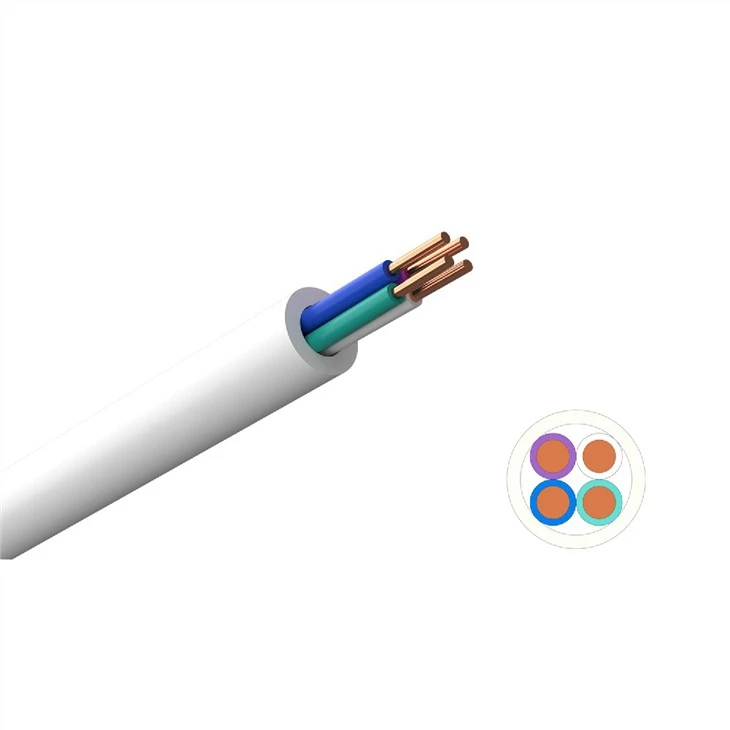
Insulated and Sheathed Flexible Cable (RVV) is more flexible than BVV cables and is often used in applications where the cable needs to be moved or bent frequently. It can have multiple cores, and the core size and arrangement can vary depending on the specific application.
The flexibility of RVV cables comes from the use of smaller - gauge cores and a more flexible insulation material. However, this flexibility can sometimes come at the cost of signal integrity. The smaller cores may be more prone to signal attenuation, especially for high - frequency signals. And if the cores are not properly arranged or shielded, there can be a higher risk of EMI and crosstalk.
Shielded Flexible Cable (RVVP)
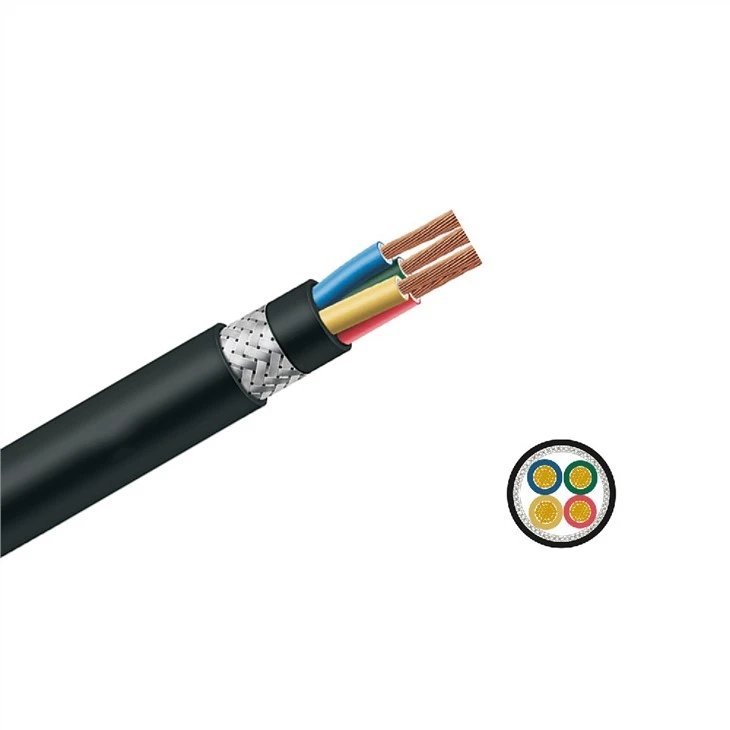
Shielded Flexible Cable (RVVP) is designed to reduce EMI and crosstalk. It has a shielding layer around the cores, which helps to block external electromagnetic fields and prevent the magnetic fields generated by the cores from interfering with each other.
The core configuration of RVVP cables is often optimized for signal transmission. The cores may be arranged in a twisted - pair or other low - interference configuration. This makes RVVP cables suitable for applications where high - quality signal transmission is required, such as in audio and video systems or in some industrial control systems.
Conclusion
In conclusion, the core configuration of a multi - core sheathed cable has a profound impact on signal transmission. The number of cores, their size, and their arrangement all need to be carefully considered based on the specific application requirements. Whether you're looking for a cable for power distribution, data transmission, or something else, understanding how the core configuration affects signal transmission is essential.
If you're in the market for multi - core sheathed cables and want to discuss your specific needs, feel free to reach out. We're here to help you find the right cable solution for your project.