

Tunnel fans live a strange life. Most of the time, they're moving air quietly in the background-diluting emissions, keeping visibility up, responding to sensors nobody thinks about. Then, maybe once in their entire service life, they're asked to do something completely different: keep smoke away from people who are trying to get out.
That second job is what makes tunnel and metro ventilation a different animal from any other fan application.
Two duties, one piece of equipment
On a normal day, a road tunnel fan is managing vehicle emissions. CO, NOx, particulate-the sensors read the air, the system stages fans on or off, and the fans spend most of their time at part load. Metro stations are similar: the big variable is train frequency and braking heat, not fire.
The equipment reflects this. Jet fans bolted to the ceiling impart momentum to the air column-no ducts, just thrust. Metro systems use axial fans connected to ductwork, sometimes with platform screen doors changing the whole pressure relationship between tunnel and platform. Either way, the fans are sized for volume. They need to move a lot of air, efficiently, day after day.
Then there's the other day. The one nobody plans for but the spec has to account for.
When temperature rewrites the spec
During a tunnel fire, the ventilation system becomes part of the escape route. It has to push or pull smoke in a direction that keeps evacuation paths clear. To do that, the fans have to keep running while the air around them is hot enough to warp steel.
The numbers vary by code and tunnel type. Road tunnels commonly require 250°C for one hour. Metro and sub-sea tunnels push that to 400°C for two hours. Some projects go higher. These aren't conservative guesses-they come from fire modeling that estimates smoke layer temperatures under worst-case conditions.
What changes in the fan isn't just the paint. The motor can't sit in that airstream. Bearings that are fine at 80°C will fail well before 200°C, so the lubrication and bearing housing design have to be reconsidered. The casing itself-carbon steel loses yield strength as temperature climbs, which changes the structural calculation. Even the flexible connections need to accommodate thermal growth of several millimeters over a short span.
This is why "high-temperature fan" isn't a single product. It's a set of engineering decisions about motor location, bearing type, casing thickness, and expansion joints. If the supplier can't explain those decisions, the rating on the datasheet is just a number.
Reversal isn't optional
Tunnel ventilation has to work in both directions. If a fire is at one end of the tunnel, the system might need to push air in from that end to keep smoke from spreading. If it's mid-tunnel, the flow might need to reverse entirely to carry smoke away from where people are.
Axial fans handle this better than centrifugals-their symmetry helps. But even among axial designs, the performance drop in reverse can range from 10% to 50% depending on the blade and casing design. That gap matters when the fire safety engineer has specified a minimum extraction rate in both directions. The fan has to deliver it, at temperature, in reverse. That's not a catalog lookup. It's a performance verification.
The sizing compromise
Here's the practical problem: the normal-duty point and the emergency-duty point often sit far apart on the fan curve. A fan that's perfect for daily ventilation might stall before it reaches the emergency extraction pressure. One sized for the fire scenario might be grossly oversized for daily use, running inefficiently and making noise nobody wants in a station.
The usual answer is a controlled oversize for normal duty, with VFDs keeping the part-load efficiency in check. The motor gets a service factor that covers the emergency power demand, which can be higher than normal because hot air is less dense and the system resistance changes with damper positions during a fire event.
It's not elegant, but it works. The key is making the trade-off visible during design, not discovering it during commissioning.
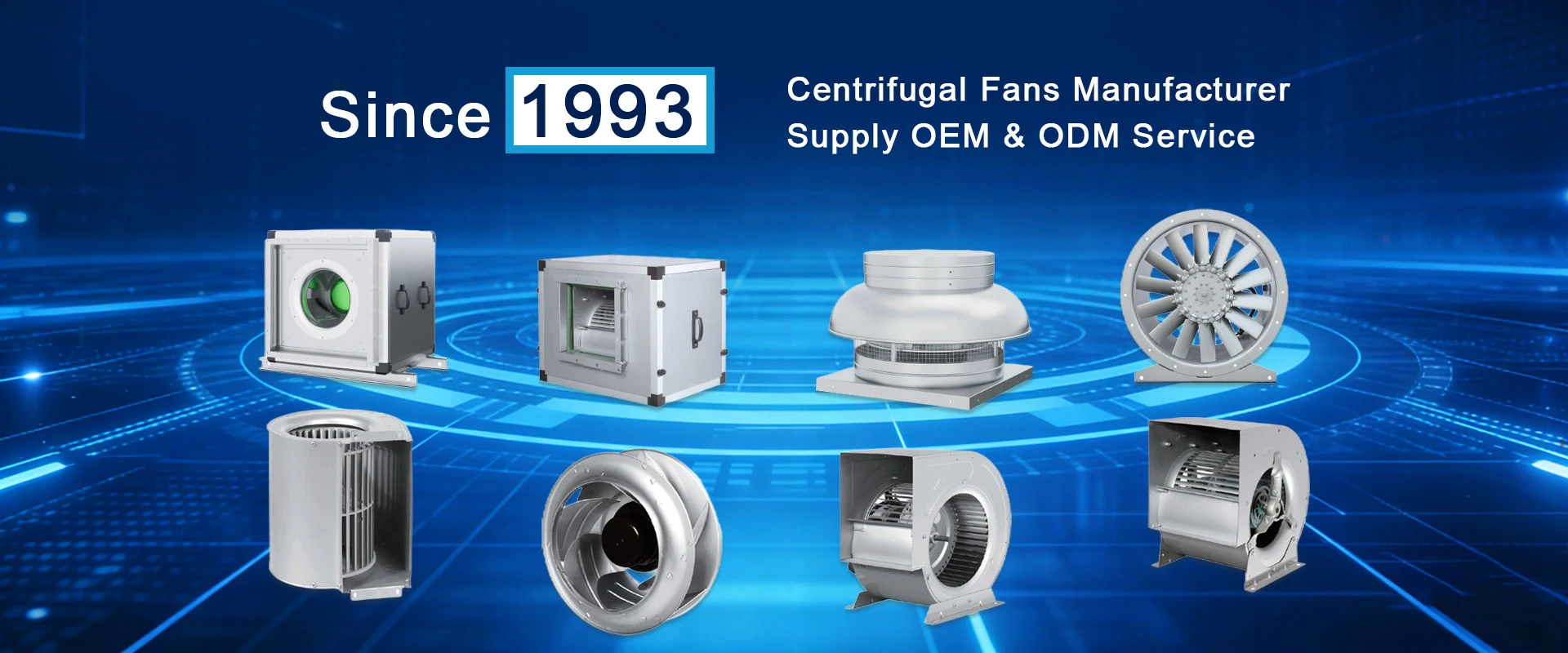
MIDI Industrial's centrifugal fan platforms can be configured for high-temperature tunnel and metro applications. We work with consultants and contractors to verify both daily performance and emergency compliance against the project's specific fire safety requirements.