

Heat pumps and central heating/cooling plants are fundamentally different from traditional constant-volume air systems. They modulate capacity continuously, respond to outdoor conditions, and operate across a wide range of load conditions. The air-moving equipment must keep pace-not just at design day, but across the entire seasonal operating envelope. A fan selected for peak cooling load may be the wrong choice for the 80% of hours the system spends in part-load operation.
Variable Capacity Changes the Fan's Job
In a conventional constant-volume system, the fan runs at a fixed speed and delivers a fixed airflow. The heating or cooling source modulates to match the load. The fan's operating point is essentially static. In a heat pump or variable-source system, both the thermal capacity and the airside requirement change simultaneously. As the heat pump modulates down, the required airflow decreases. The fan must track this reduction without falling into inefficient or unstable regions of its performance curve.
The relationship between thermal capacity and airflow is not linear. As heating or cooling demand drops, the required airflow decreases, but the coil's pressure drop decreases as the square of velocity. The system curve flattens at part load, which can push the fan toward lower efficiency regions if the control strategy doesn't compensate.
Coil Pressure Drop and Fan Interaction
The coil in a heat pump system operates across a wide range of entering water temperatures, refrigerant pressures, and airflows. As airflow decreases at part load, the coil's pressure drop decreases, but the heat transfer characteristics change. Lower airflow across the coil can improve heat transfer effectiveness per unit of air, up to a point. Beyond that point, the airside resistance to heat transfer dominates, and capacity drops rapidly.
This creates a moving target for fan selection. The system requires a certain airflow to maintain coil effectiveness, but the fan power required to deliver that airflow changes with the coil's operating condition. The optimal balance point shifts continuously as outdoor conditions change.
Part-Load Efficiency Dominates Annual Consumption
Heat pumps operate at part load for the majority of their operating hours. A system might spend 60% to 70% of its annual operating hours below 50% capacity. The fan's efficiency at these part-load points determines the majority of the system's annual energy consumption. A fan with excellent peak efficiency but poor part-load performance will cost more to operate over the year than a fan with slightly lower peak efficiency but strong part-load characteristics.
EC motors with integrated speed control address this directly. They maintain high motor efficiency across the speed range, avoiding the efficiency drop that AC motors experience at low speeds with VFDs. For heat pump applications with long part-load operating hours, this difference compounds significantly.
Static Pressure Reset and Control Integration
Advanced heat pump systems use static pressure reset strategies-adjusting the fan speed based on the most-demanding terminal rather than maintaining a fixed system pressure. This requires the fan to respond smoothly to changing control signals across its entire operating range. The control interface between the fan and the heat pump controller must be planned as part of the selection, not added afterward.
The pressure sensor location becomes critical. In a variable-air-volume heat pump system, a sensor at the fan discharge measures only the pressure the fan is producing, not the pressure actually needed at the terminals. A sensor further downstream-at the critical zone-provides the feedback needed for true demand-based control. The difference between these two locations can be 20% to 30% in fan power consumption.
Defrost Cycles and Transient Operation
Air-source heat pumps enter defrost cycles that temporarily reverse operation. During defrost, the indoor fan may need to operate at reduced speed or remain off entirely, depending on the system design. The fan must handle these transitions without stress or instability. Rapid speed changes during defrost entry and exit can cause transient system effects that affect both the fan and the duct system.
The control sequence must account for these transients. Gradual ramp rates, minimum off-times, and speed limits during transition periods prevent mechanical stress and maintain system stability. The fan's response characteristics-how quickly it accelerates and decelerates-become part of the system design.
MIDI Industrial and Heat Pump Applications
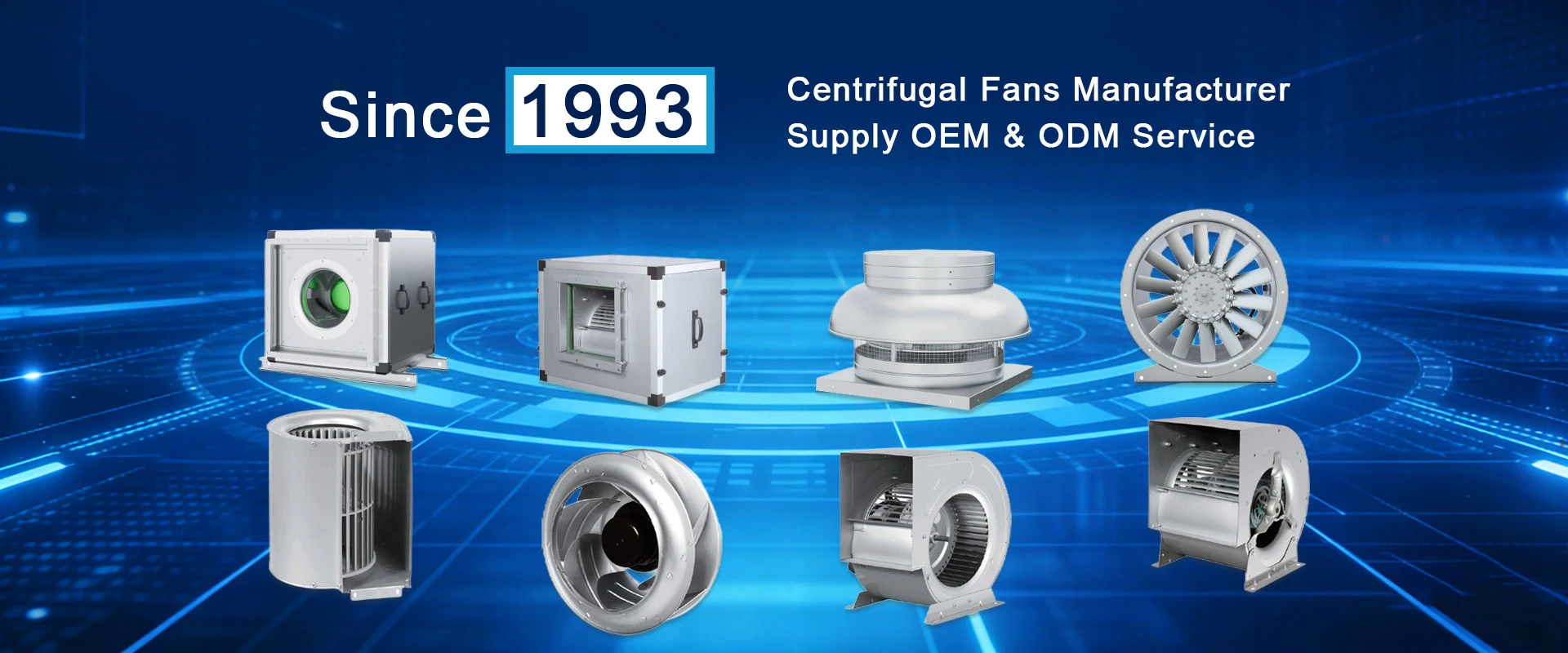
MIDI Industrial centrifugal and EC fan systems are designed for the variable-capacity, variable-speed demands of heat pump and central plant applications. Our selection process evaluates performance across the full operating range, with emphasis on part-load efficiency where systems spend most of their time. We coordinate with heat pump manufacturers and system designers to ensure the airside equipment matches the thermal source characteristics, from defrost response to static pressure reset capability.