

Building ventilation used to be a simple brief: bring in fresh air, exhaust the stale stuff, keep the air moving. Today, that's no longer enough. Building owners are under pressure to cut energy consumption, meet tightening efficiency regulations, and maintain healthier indoor environments. In the middle of all this, EC (Electronically Commutated) fan systems have moved from a premium upgrade to a standard specification in modern Air Handling Units (AHUs).
What Makes EC Different
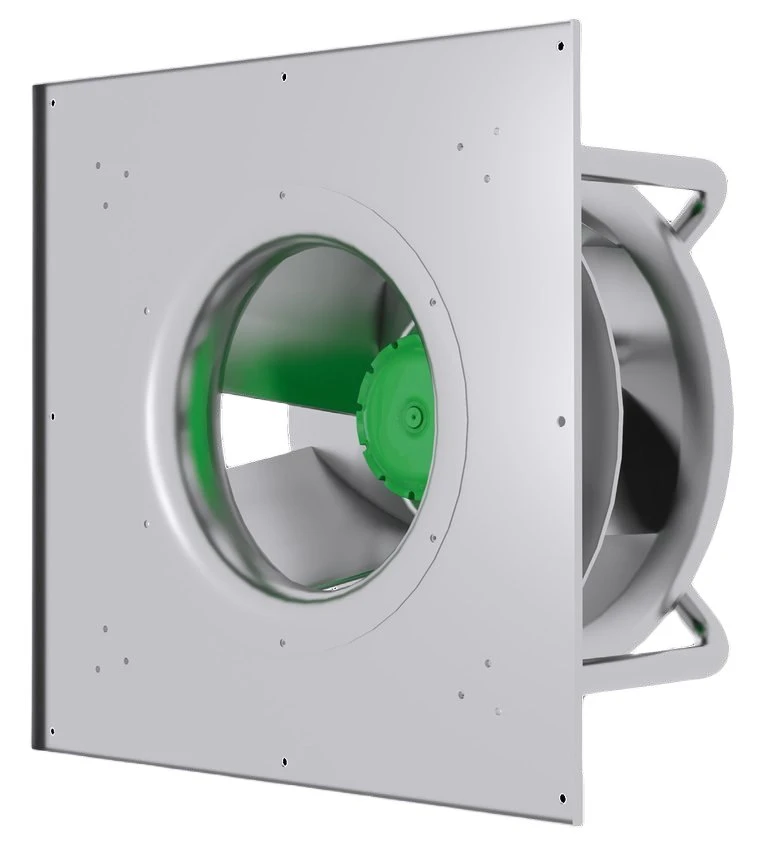
An EC fan integrates a brushless DC motor with onboard electronic controllers. It runs on standard AC power-no separate DC supply needed-but delivers the precise control and efficiency of DC technology. The commutation happens electronically rather than mechanically, which eliminates brushes, reduces heat, and extends service life.
The real game-changer is speed control. Traditional AC fans need external Variable Frequency Drives (VFDs) to vary speed, which adds cost, complexity, and points of failure. EC fans have infinitely variable speed built in. A simple 0–10 V signal or PWM input adjusts the motor from near-zero to full speed with remarkable precision.
Energy Savings You Can Measure
The numbers are compelling. In typical HVAC applications, EC fans are 20% to 50% more efficient than equivalent AC motors with VFDs. In a commercial building where fans run around the clock, that efficiency gap translates into thousands of dollars in energy savings over the life of the system.
But the savings go beyond the motor itself. Because EC fans produce less heat, they reduce the thermal load on surrounding equipment. In data centers and server rooms, that secondary benefit can be just as valuable as the direct energy savings.
Performance Under Real Conditions
Central air conditioning systems don't operate at a steady 100% load. Cooling demand fluctuates with occupancy, outdoor temperature, and time of day. EC fans adapt automatically. As filters accumulate dust and system resistance rises, the controller ramps up speed to maintain constant airflow-something fixed-speed fans simply cannot do.
Soft starting is another underrated advantage. Instead of drawing a massive surge of current at startup, EC fans ramp up smoothly. This reduces stress on electrical infrastructure and eliminates the light flicker that sometimes plagues buildings with older fan systems.
MIDI Industrial EC Solutions
At MIDI Industrial, our EC Fan Systems are designed specifically for demanding HVAC environments. From our CBF series to custom configurations, we engineer each unit for seamless integration into AHUs, heat recovery systems, and cleanroom applications. We work closely with contractors and distributors to specify the right fan for the job-balancing airflow, pressure, efficiency, and budget.
The shift toward EC isn't just a trend. As energy codes tighten globally and building certification programs like LEED and BREEAM place greater emphasis on fan efficiency, EC technology is becoming the baseline. Choosing EC today isn't just about saving energy-it's about future-proofing your building.