

Industry Insight: EC Fan vs AC Fan - Which Is Better for HVAC Applications?
Perspective: Midi Industrial (Founded 1993, Deqing Zhejiang)
Smart Air · Fan + Intelligent Motor System Integrator
In commercial and industrial HVAC specification, the debate is no longer "AC vs EC" as a matter of technology novelty - it is a question of total cost of ownership, control architecture, and system efficiency across the real duty cycle.
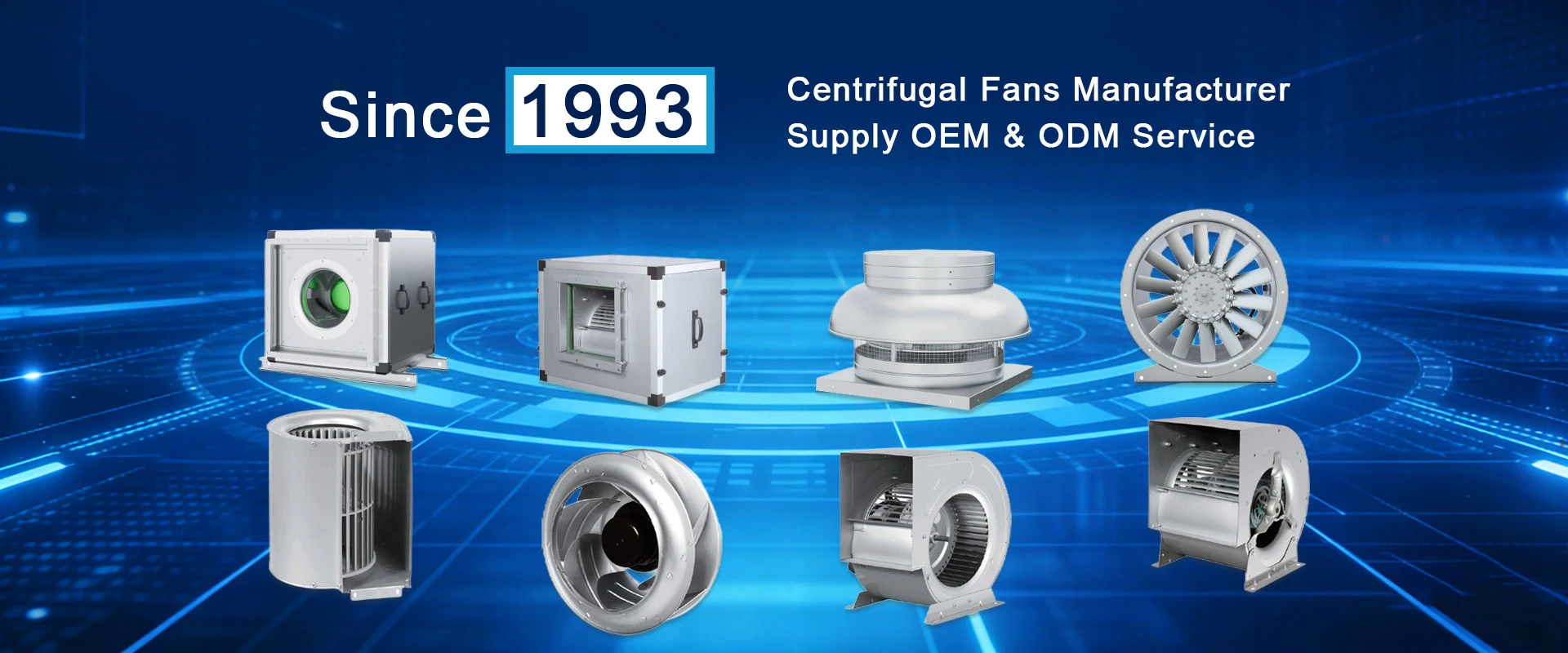
At Midi Industrial, we manufacture both AC and EC platforms (axial, centrifugal, plug/fan-wall, forward- and backward-curved). The right answer is never "EC always wins." It is: match the motor architecture to the load profile.
1. The Fundamental Difference (Why EC Behaves Differently)
|
Layer |
AC Fan (Induction) |
EC Fan (Electronically Commutated) |
|---|---|---|
|
Motor |
Squirrel-cage induction, slip-dependent |
PM brushless DC/PMSM + integrated inverter |
|
Power stage |
Runs on mains directly; VFD optional |
AC in → rectify → DC bus → 3-phase PWM out |
|
Control |
On/off, tap, or external VFD |
Built-in 0–10 V / PWM / Modbus / BACnet |
|
Commutation |
Magnetic induction |
Electronic (sensor/sensorless FOC) |
|
Rotor loss |
Rotor copper + slip loss |
Near zero (permanent magnet) |
EC is not "a better AC motor." It is an integrated mechatronic unit: impeller + magnet motor + drive + controller.
2. HVAC Duty Cycle: Where EC Pulls Ahead
Most HVAC fans do not run at 100% all day. They follow:
Day/night building load
Filter clogging curve (rising static pressure)
Seasonal condenser demand
VAV / fresh-air demand-based control
Fan power follows the cube law:
$$P \propto N^3$$
So at 80% speed → ~51% power
At 60% speed → ~22% power
At 50% speed → ~12.5% power
An AC fan with dampers or a VFD still carries induction losses. An EC fan keeps high efficiency down the curve.
Midi field data and industry benchmarks: EC typically saves 25–50% annual fan energy vs AC in variable-load HVAC.
3. Head-to-Head Comparison (HVAC Lens)
|
Criteria |
AC Fan |
EC Fan (Midi EC Platform) |
|---|---|---|
|
Full-load efficiency |
60–75% |
80–92% |
|
Part-load efficiency |
Drops sharply |
Stays flat/high |
|
Speed control |
Needs external VFD |
Native, stepless |
|
Airflow control |
Damper throttling (wasteful) |
True variable speed |
|
Noise |
Magnetic hum, belt/vibration |
Smooth, low tonal noise |
|
Starting current |
5–7× rated |
Soft-start, low inrush |
|
Maintenance |
Belts, bearings, capacitors |
No brushes; sealed bearings |
|
Lifespan |
20–30k h (typical) |
40–80k h+ |
|
BMS integration |
Limited |
Native feedback, alarm, telemetry |
|
CapEx |
Lower |
+20–50% |
|
OpEx (24/7) |
Higher |
Payback 12–30 months |
4. Midi Industrial EC Line in HVAC Context
We do not sell "a fan" - we sell a matched air system.
EC Centrifugal / Plug Fans (AHU, fresh air, VAV)
YUWA / YUWB / YUWE plug fans: 133–630 mm, up to 22k–24k m³/h, built-in EC drive, no external VFD
YUW / SYWB / YPF-E: backward-curved direct-drive plug fans for large AHUs, up to 3.4 kPa static pressure, fan-wall ready
ZQ / ZQL2: forward-curved EC for ceiling units, VAV boxes, fan coils
EC Axial Fans (chiller, condenser, heat pump)
AXF series: 710–950 mm, 10k–35k m³/h, –40 to 65 °C ambient, modulates with condenser demand
Small EC Modules
YEM / PP: 60–120 W class, PWM/RS-485, for ERV, purifiers, FCUs
All support:
1φ 220 V / 3φ 380–400 V input
0–10 V, PWM, Modbus
Dynamic-balanced impeller (ISO 1940 / AMCA G6.3)
5. When AC Fan Is Still the Right Call
EC is not religion. We still specify AC when:
Fixed-speed, <2,000 h/yr
Warehouse exhaust, plant-room purge, temporary ventilation.
Harsh electrical/env edge cases
Extreme ambient heat + corrosive atmosphere where controller electronics need isolation/remote VFD.
Ultra-low budget, no control logic
Simple "move air" job, no BMS.
Very large MW-class single blower
Where a separate VFD + rugged AC machine is easier to service.
In these cases, AC + optional VFD is pragmatic.
6. When EC Is Clearly Better (Midi Recommendation)
AHUs / VAV systems
Fresh-air ERV/HRV units
Data center CRAH/CRAC
Chiller & heat-pump condensers (ambient-following)
Cleanrooms / FFU arrays
Commercial buildings with BMS
Retrofit of "AC fan running full speed + damper" (biggest hidden waste)
Rule of thumb:
If the fan runs >2,000 h/yr and spends >40% of time below 80% speed, EC pays back fast.
7. Lifecycle Cost Example (Simplified)
Assume 1.5 kW fan, 24/7, 0.8 load factor, €0.12/kWh:
AC (with VFD): ~1.4 kW avg → ~12,200 kWh/yr
EC: ~0.9 kW avg → ~7,900 kWh/yr
Saving: ~4,300 kWh/yr ≈ €515/yr per fan
500-fan AHU retrofit → €250k/yr, payback often <2 years.
Multiply by 10-year life → EC wins decisively.
8. Engineering Caveats (Don't Just Swap)
EC retrofit needs proper integration:
Duty point first: airflow + total static pressure (clean & dirty filter)
Mounting: plug fan vs cased centrifugal vs axial
Harmonics: EC arrays need line choke / active filter if THD is high
Cooling of controller: electronics hate 70 °C+ ambient - Midi uses hub cooling + thermal derating
Control wiring: 0–10 V vs 485, fail-safe speed on signal loss
Fan wall redundancy: N+1 EC array beats single big AC blower
9. Midi Industrial Viewpoint
We position it like this:
AC platform = robust, low-cost baseline for constant-load ventilation
EC platform = default for modern HVAC where air is a controlled variable, not a fixed output
For new AHUs, chillers, and smart buildings in 2026+, EC is the system architecture, not an option:
Lower SFP (Specific Fan Power)
Quieter
BMS-ready
Smaller electrical footprint (no panel VFD)
Future-proof for ErP / carbon targets
10. Bottom Line
Which is better for HVAC?
Constant load, simple exhaust → AC is fine
Variable load, 24/7, controlled airflow → EC is better (lower TCO, smarter, greener)
For most commercial/industrial HVAC today, the question is not "EC or AC" - it is:
How do we build the air system around EC, with AC reserved for the edges?
That is how Midi Industrial designs it: fan + motor + drive as one validated system.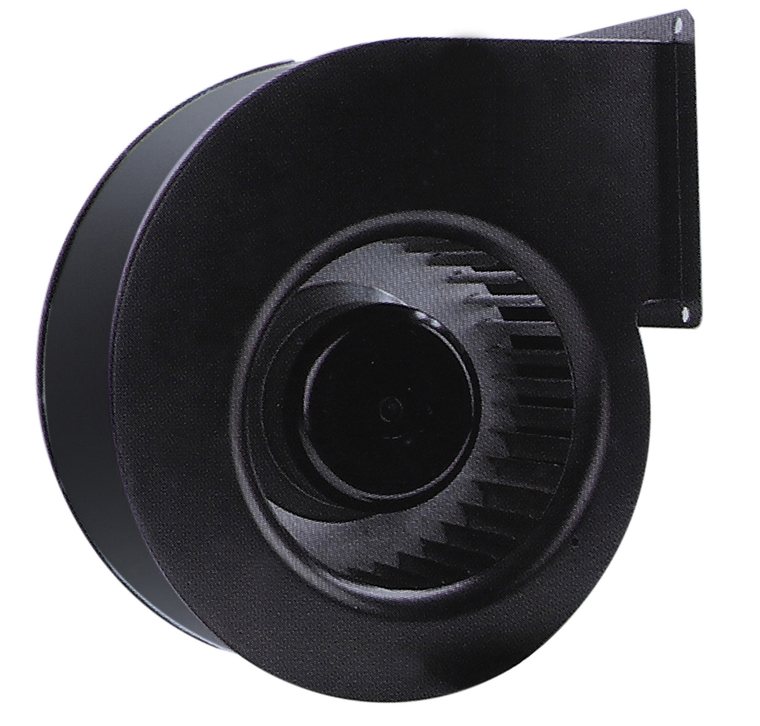
Get a quote for YEM - EC Motor Driven Forward Multi-Blade Centrifugal Fan